
The AI Stepwell, or what happens when academic publishing gets flooded
Aug 01, 2026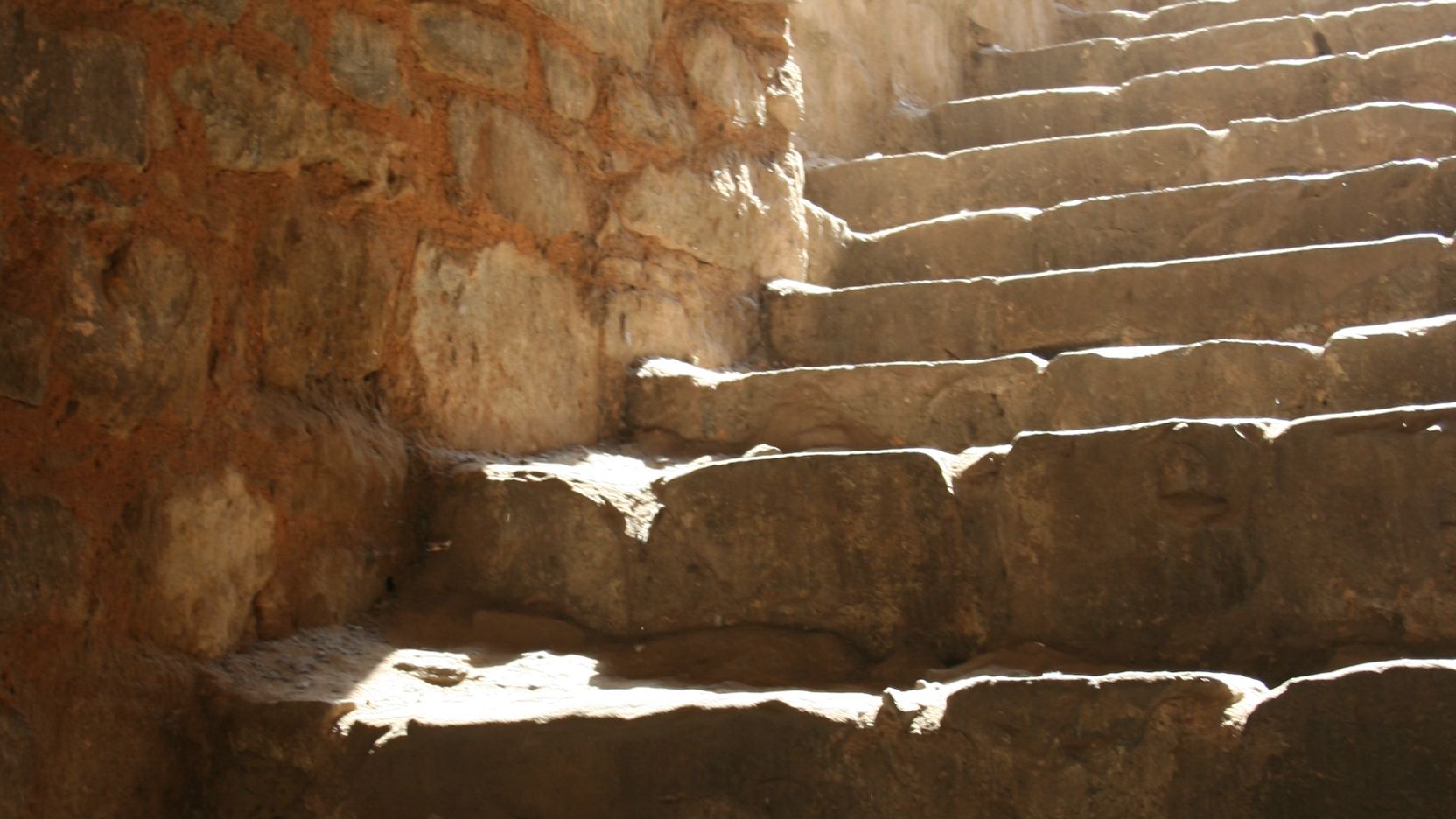
Descent
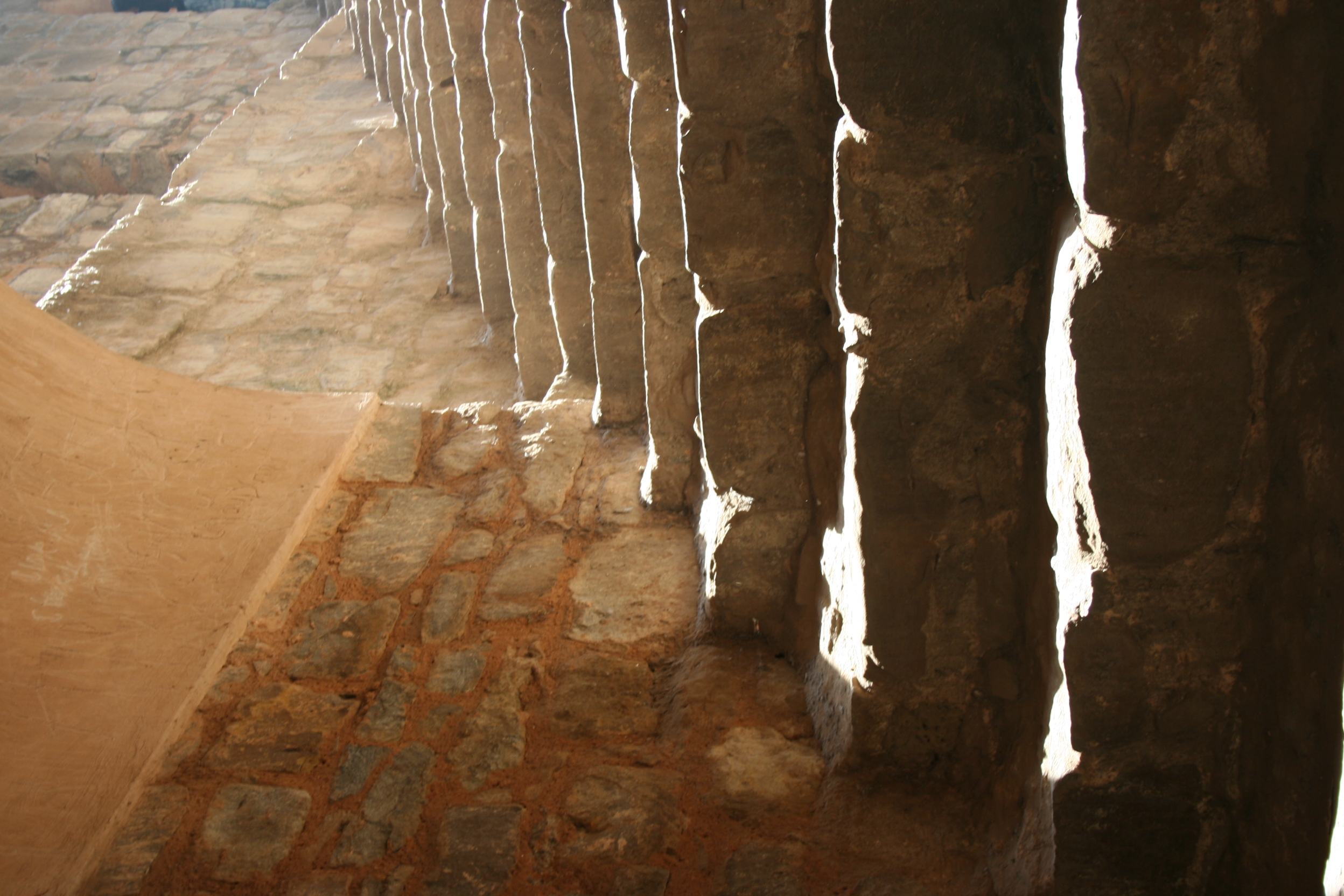
I stand on the precipice of the baoli (stepwell) in the oppressive Delhi heat, squinting down at the endless steps leading into a narrow cavern of darkness and the promise of a drinking well. As I begin the descent, the tall buildings of the city recede as the stone walls rise around me. Cautious, I step down slowly. Birds circle around the cloudless sky and the traffic sounds muffle. I reach a depth where I'm now in shade and the heat begins to lift. Further down, I feel a shift. Below ground, the temperature drops. The light dims. The energy calms. The stone carved and set millennia ago. The water ephemeral and changing each moment. Water I couldn't see from the precipice, but I knew was down there. The well was beautiful. The well was essential. It was hard work going down. And I knew it would be harder coming back up.
What the Water Was For
No one climbing down those steps checked the engineering. They checked whether there was water at the bottom, and whether it was still good. That was the whole system. You trusted the well because your mother trusted the well, because her mother did, because the stone had held for longer than anyone standing on it had been alive. Trust didn't need to be earned each time. It was inherited.
For most of the time academics have been publishing research, something similar was true. No one at the journal checked whether you'd actually written every sentence yourself. They didn't need to. The system had a stone floor under it that nobody thought to test, because nobody had reason to.
That floor doesn't hold anymore.
The Concrete Jungle Arrives
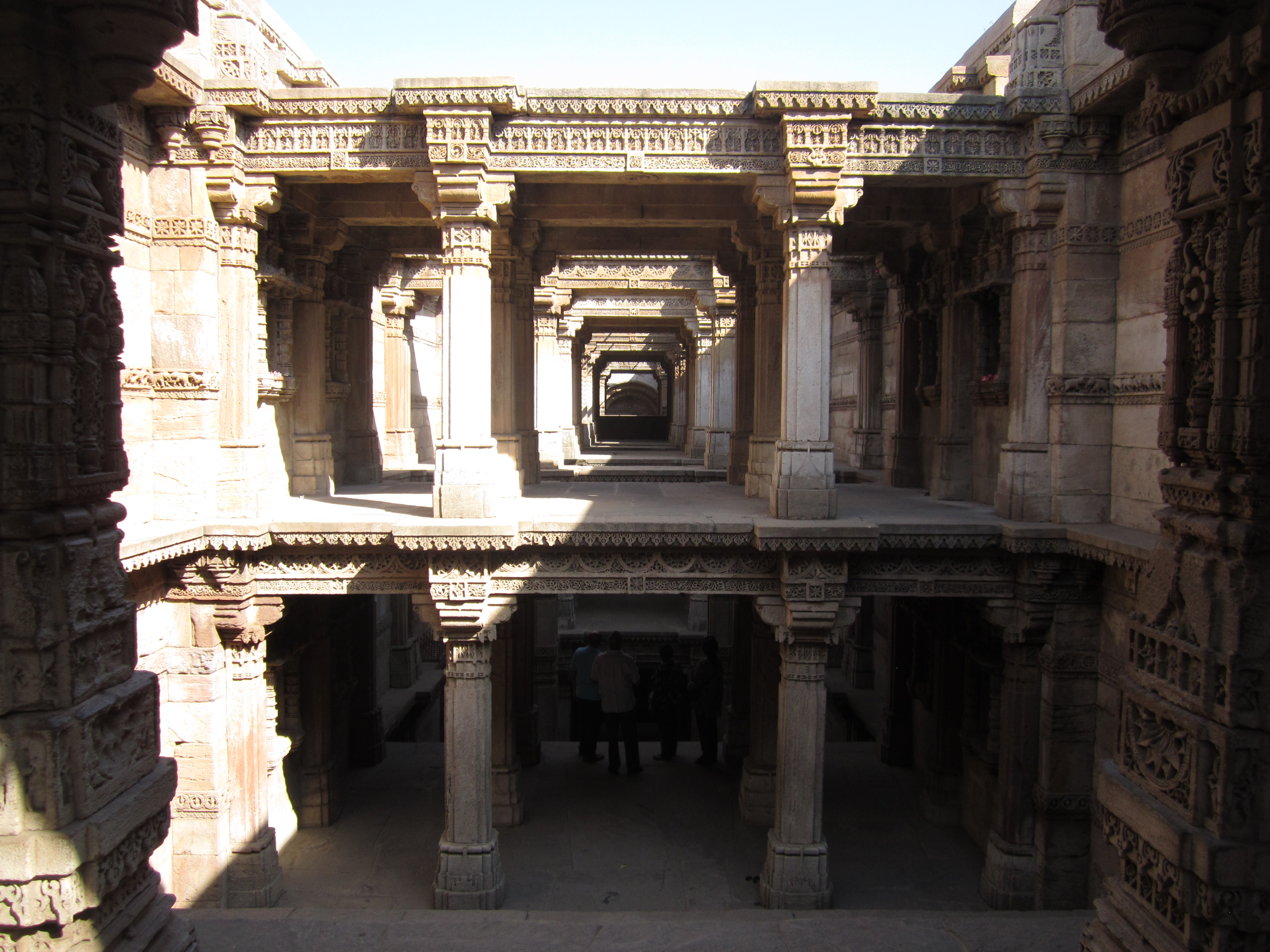
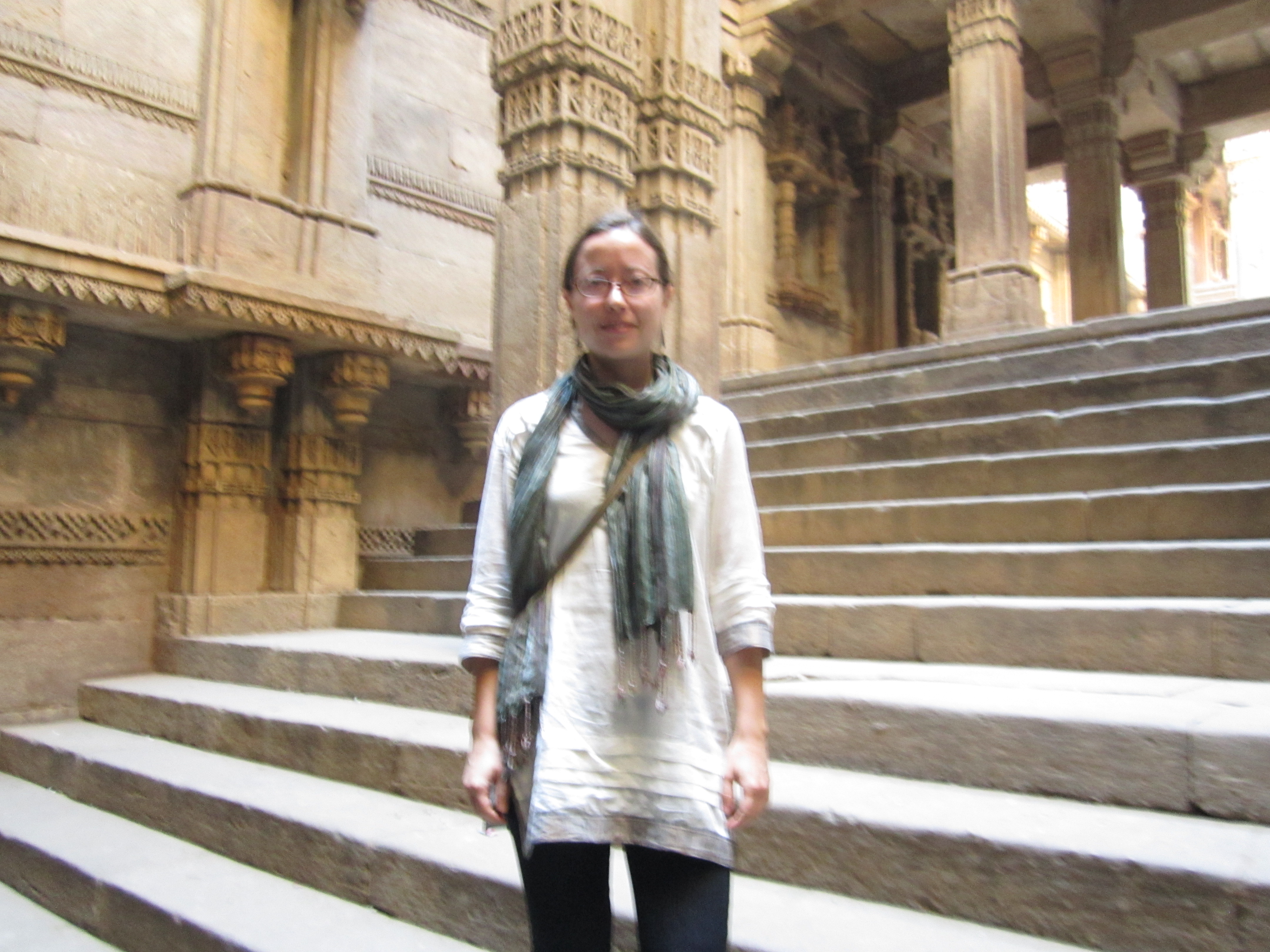
I'm standing in the Ugrasen ki Baoli, a stepwell hidden in 'central' Delhi — an estimated location, at best, in a city exceeding twenty-five million people. I'd come as a tourist, not a scientist. As if my scientist brain would take a rest. I should have known better. The first thing I thought, standing at the bottom of that well built to solve a water problem, was that without water there is no settlement. Without clean water, there is no settlement. Rivers gave us cities. Rivers also collect everything upstream of them, which is another way of saying rivers are where pollution goes to become someone else's problem downstream.
I'd spent two years doing fieldwork with farmers along the Delhi Yamuna river floodplain by then. My senses memorized that river. Before I ever saw it, I tasted it. My eyes burned. An acrid smell filled my nose before I understood what I was smelling: a river polluted. Which is why the baoli became essential infrastructure to provide clean water. For a time.
Stepwells didn't fail because the engineering failed. The stone held. What changed was everything around the stone. A population that outgrew what a single well, however deep, could serve. Electrified borewells that could pull water faster than any well with steps, sucking the water table down until the well below the steps was a well below nothing. Polluted, because a structure people stop needing daily becomes a structure people stop protecting. The wells didn't crumble. They got buried under what a faster, less visible system left behind.
Something similar is happening to a much younger structure. Submissions to major journals are up more than 40 percent since ChatGPT arrived — not because there is suddenly 40 percent more science, but because the friction of producing something that looks like a paper dropped to nearly nothing. And the papers coming through that faster system are, on the whole, worse: higher rejection rates, lower readability scores, thinner peer review feedback. One recent count put nearly a third of new preprints on arXiv as AI-written papers — a share that was close to zero three years ago. The flood isn't fictional AI overlords deciding to replace scientists. It's just volume, arriving faster than the system built to evaluate it can actually look at any of it closely.
And the flood doesn't hit everyone the same depth. The tools built to catch machine-written prose are, right now, measurably worse at reading some kinds of human water than others — flagging dense, formal, non-native-inflected English as suspicious at rates several times higher than they flag the same kind of writing from native speakers. The current is stronger for some swimmers than others. It always is.
The Flood, By the Numbers
- Journal submissions are up more than 40% since ChatGPT's late-2022 launch — not matched by a proportional rise in actual research. [1]
- AI-assisted manuscripts are showing higher rejection rates, lower readability scores, and thinner peer review feedback than pre-AI submissions. [1]
- Nearly one in three new arXiv preprints now reads as AI-written, up from close to zero before 2022. [2]
- AI detection tools misclassify human writing unevenly — ~61% false-positive rate on TOEFL essays from Chinese students vs. ~5% from U.S. students, across 16 systems tested. [3]
Check out: Science-Adjacent: AI is Ultra-processing Academic Writing and We are on the Verge of Starving
Is the Water Still Good?
From the bottom of the well, looking up, every stepwell looks the same. The carving is intact. The steps are steady underfoot. Nothing about the stone tells us whether the water is safe to drink. You either drink it yourself, or someone else does and reports back to the group.
Academic publishing used to work on something like that same principle. A paper that read like it belonged in the literature probably did. The tone, the citations, the careful evidence-based claims — these were signals, imperfect but real, that an expert had done the work of thinking the paper demonstrated.
That signal is breaking. There's a term for one version of what's replacing it: credibility illusion, which is text that presents itself with the fluency and authority of expertise the author doesn't actually have. The stonework looks fine. That was never the part in question. What's in question is what's underneath it, and the stonework was never built to tell you that.
There's a second, less obvious failure track, and it's unsettlingly worse because it doesn't require anyone to intend to do it: implicit plagiarism, where an AI tool reproduces something from its training data without attribution, and the author genuinely has no idea they've done anything wrong. They didn't drink bad water on purpose. They didn't know the water had picked up some contaminants along the way.
This isn't hypothetical. More than half of this year's retracted academic papers involve some AI-related failure: a hallucinated reference, an undisclosed generation, data that was never real to begin with. That's the highest share on record, and it's climbing. One recent retraction happened after a paper's author used AI to identify and summarize its own citations — and never checked whether those sources existed! Bummer: they didn't. The journal found out after publication. The retraction is permanent. The paper is gone. So, in the way that matters most for a career built on a publication record, is some of the trust that took years to build.
You can survive drinking bad water once, if you're lucky and it's caught early.
What's Actually Breaking
- Researchers screened 1,152 articles and analyzed 335 AI-related retractions. Of the 325 with a known retraction date, 155 (46.3%) occurred in 2023 alone, followed by 76 (22.7%) in 2024. [4]
- Legal scholars have proposed two failure categories — credibility illusion and implicit plagiarism. [5]
Check out: Plagiarism with a small 'p': Are we entering a dystopian future where everyone is guilty?
The Turn: Revival, Not Nostalgia
Restoration doesn't happen because someone missed the old stone. It happens because the city runs out of water. Delhi didn't restore its baolis for the view. Cities across India are approaching what officials now call day zero — the point at which the taps simply stop — and old wells that sat buried under decades of garbage are being dug out, cleaned, and put back to work because there is nowhere else left to look. One restored well in Delhi now supplies over thirty thousand gallons a day. Restored wells elsewhere have pulled the water table up from hundreds of feet down to something closer to the surface. This isn't heritage tourism. It's plumbing.
Something similarly unglamorous is happening in academic publishing, and it's easy to miss because it doesn't come dressed as a crisis response. It's a checkbox. A line in the methods section. A named tool and a stated purpose, sitting in a section before the references that almost no one reads unless they're looking for exactly that. Elsevier wants it in a dedicated section. APA wants it in methods. BMJ built it directly into the submission portal so no one can skip past it by accident. None of this is dramatic. None of it fixes the AI-induced flood. What it does is what checking the water always did: it doesn't stop contamination from being possible, it just makes sure someone looks before anyone drinks.
The old stepwells were never meant to filter every drop that fell into them. They were meant to hold water long enough, and visibly enough, that someone could check it before it reached a mouth. It seems like a low bar. But it's a bar that keeps disappearing every time a system scales faster than the people checking it can keep up.
How Journals Are Responding (For Now)
- Elsevier requires AI disclosure in a dedicated section before the references. [6]
- APA requires disclosure in the methods section, with formal citation of the tool. [7]
- BMJ has built disclosure prompts directly into its submission portal. [6]
- ICMJE's January 2026 update reclassified AI nondisclosure as research misconduct. [8]
- Roughly 70% of high-impact journals now have some form of AI use policy. [9]
Ascent
The climb back up took longer than the climb down. It always does. Every step that had opened onto shade going down now opened onto more heat coming up, and somewhere past the halfway mark I stopped looking at how far I'd come and just watched my feet find the next stone.
I didn't check the water that day. I wasn't thirsty, and the baoli wasn't there for me (I was a tourist, remember?). It was there for whoever had been drinking from it for the better part of a thousand years, through periods when it was trusted completely and periods when no one trusted it at all, when it sat forgotten under its own silt until someone decided it was worth cleaning out again.
I don't know if the well I climbed out of is one of the ones still supplying water, or still waiting to be needed again. I didn't ask. But next time I'm in Delhi, I plan to climb back down and see for myself.
If you're about to submit somewhere, you probably already have this question sitting in the back of your mind:
What exactly am I supposed to disclose, and where?
I put together a disclosure checklist covering the publishers most relevant to social and environmental science research — Elsevier, SAGE, Taylor & Francis, etc — so you don't have to dig through every submission portal to find out. Know before you submit, not after an editor asks.
Get the AI Disclosure Checklist
Footnotes
Don’t forget to check out my new videos this month.
You can find them in the Publish It! Library
Or watch on the Publish It! YouTube channel. I upload new content weekly so subscribe if you are interested!
If you are ready to Draft It! check out The Essential 10-Week Workshop – a self-paced course with tutorials, community discussion board, and workbook designed to guide you in preparing your first draft in 10 weeks for submission to a peer reviewed journal!
And while you are at it—join the Publish It! Community and share your experiences with other academic writers. It’s free!
Sources
[1] Gartenberg, C., Hasan, S., Murray, A., & Pierce, L. (2026). More versus better: Artificial intelligence, incentives, and the emerging crisis in peer review. Organization Science, 37(3), 795–812. https://doi.org/10.1287/orsc.2026.ed.v37.n3
[2] Northeast Times: "One in three new science papers now reads as AI-written, study finds" - https://northeasttimes.com/2026/07/21/one-in-three-new-science-papers-now-reads-as-ai-written-study-finds/
[3] Tech Times: "AI Text Detectors Flag Polished Human Writing as AI" - https://www.techtimes.com/articles/319137/20260626/ai-text-detectors-flag-polished-human-writing-ai-new-studies-expose-built-paradox.htm
[4] Sivaramakrishnan, G., & Sridharan, K. (2026). Artificial intelligence in the retraction spotlight: trends, causes and consequences of withdrawn AI literature through a systematic bibliometric review. Frontiers in Research Metrics and Analytics. https://doi.org/10.3389/frma.2025.1737168
[5] Frontiers in Artificial Intelligence: "Legal regulation of AI-assisted academic writing: challenges, frameworks, and pathways" - https://www.frontiersin.org/journals/artificial-intelligence/articles/10.3389/frai.2025.1546064/full (also on PMC - https://pmc.ncbi.nlm.nih.gov/articles/PMC12009830/)
[6] AI Usage Cards: "AI Disclosure Policies by Major Journals" - https://ai-cards.org/ai-disclosure-policies-by-journal/
[7] APA's policy page - https://www.apa.org/pubs/journals/resources/publishing-tips/policy-generative-ai
[8] ICMJE: "Updated Recommendations (January 2026)" - https://www.icmje.org/news-and-editorials/updated_recommendations_jan2026.html
[9] Academic journals' AI policies fail to curb the surge in AI-assisted academic writing. PNAS. https://doi.org/10.1073/pnas.2526734123

Author